Floating Leaves Tea Home ---Shiuwen's Blog!

Wednesday, January 15, 2014

2013 Winter High Mountain Oolongs

I sometimes ask myself if I will ever get tired of tea. The answer so far has been no. There are so many different kinds of tea out there! And even if one claims he/she drinks only certain types of tea, one will still not get bored with the variety that can be found within one type of tea. From season to season, the same type of tea we drink will taste different.

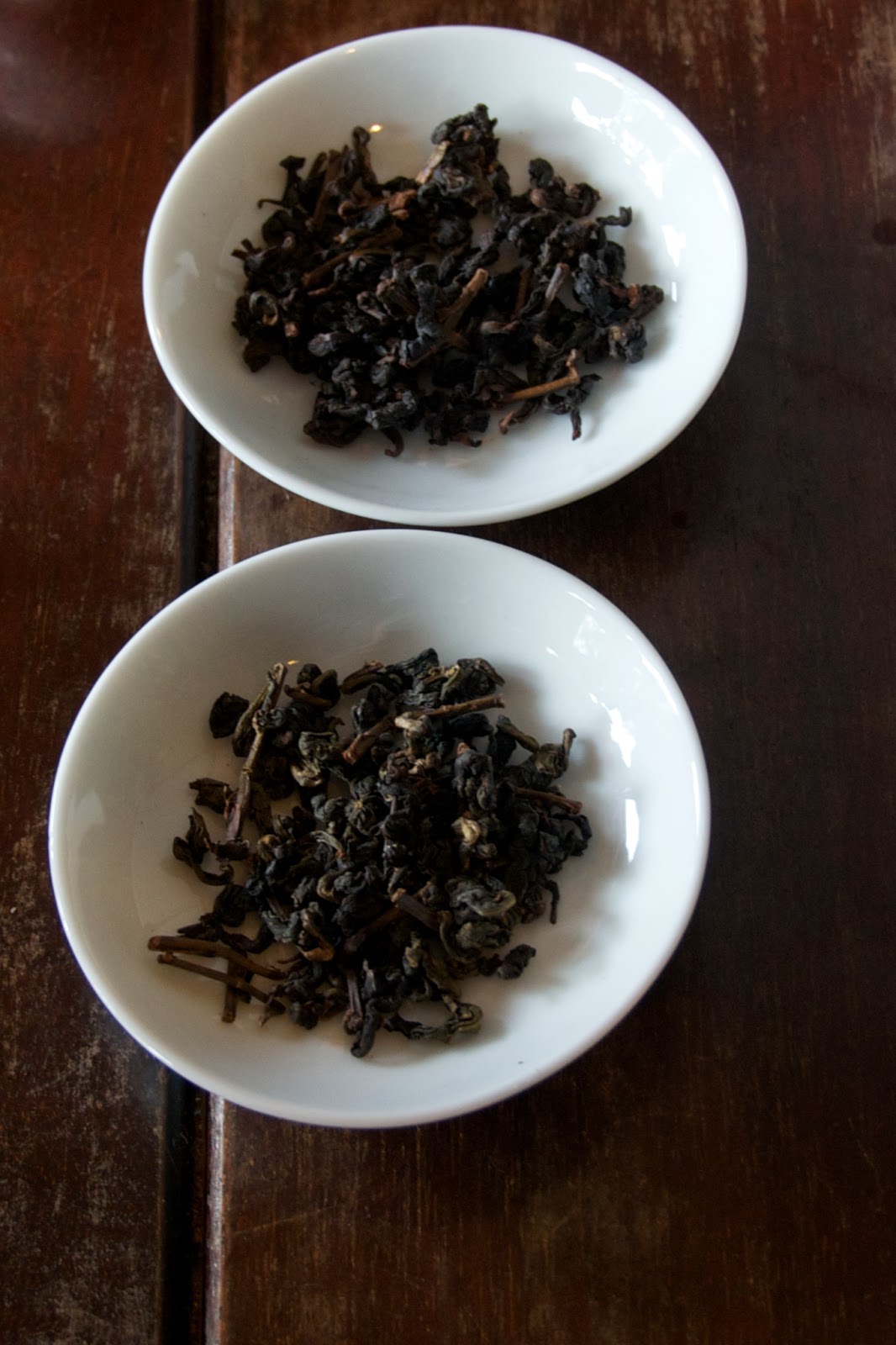
It's amazing what weather can do to tea. I had a great tea session comparing my 2013 Spring Lishan to the new 2013 Winter Lishan.


Brewed leaves: left-2013 Spring Lishan; right-2013 Winter Lishan


Tea broth: left-2013 Spring Lishan; right- 2013 Winter Lishan


Due to the warmer weather this winter, this season's Lishan doesn't seem to have as an intense taste as the Spring Lishan. However, both Lishans have that wonderfully delicious, smooth, buttery texture. What stands out more in this season's High Mountain Oolong is its aftertaste. It's simply delightful and surprising. Its aftertaste is beautiful and strong!
I don't know if you remember that the 2013 Spring High Mountain Oolong could be tricky to brew. Just a touch too many leaves could make the pot of tea too strong. I found that this Winter tea is more forgiving. Even if I brew it longer, the tea still tastes very yummy. 

The same type of tea and yet so different. I love discovering new qualities from each season's tea, especially those yummy surprises that keep dancing in my mouth. They make me excited and happy!

Monday, December 30, 2013

2013 Winter Baozhong

Our Winter Baozhong has arrived! The tea has already opened up, so I was able to compare it to our Spring Baozhong, which is also from Farmer Chen.


The Gaiwan on the bottom is Winter 2013 Farmer's Choice Baozhong


Before the tea arrived, I had heard that this winter has been warmer than usual during the tea harvest. I was a bit worried. After I tasted the winter crop of tea, my impression is that both seasons' tea is equally good, which makes me very happy. 

I tasted both seasons' Baozhong Farmer's Choice side by side. Both teas have very solid tea broths. I think the spring Baozhong was just a bit heavier, but it's really hard to notice the difference. Our spring Baozhong has an orange-like aftertaste and the winter one has a brighter, citrus aftertaste. 


Left is the brewed leaves from Winter season. Right is from Spring Season. 


Left is tea broth from Winter Baozhong, right is tea broth from Spring season.

I am satisfied with this winter Baozhong crop. It's solid and smooth with a clean citrus aftertaste. Try it and I think you will be happy with this tea, too. 

In my next post, I will write about the differences of our High Mountain Oolongs between the Spring and Winter seasons. 

Meanwhile, enjoy a good cup of tea and have a great year in 2014!

Thursday, December 05, 2013

Oolong Refresh/Roast Part II


Here are the rest of the tea roasting results from our Oolong Roast classes.

I had a bag of Alishan that had been open for too long. The tea base was good, but a little bit stale. I thought it would be fun to touch it up and see if I could get some of its original flavor to return. I found this to be the most challenging refresh roast. I refreshed this tea at 40C for one hour and the result was just exactly what I wanted! I tried it one more time using exactly the same method, but the tea didn't change much. Then I tried to refresh this Alishan with 40C for 30 minutes and then increased the heat to 50C for another 30 minutes. The tea tasted good, but a little roasted. Super sensitive tea!

Next, we tasted a Muzha Tieguanyin Maocha. I got this Maocha from Farmer Zhang last year. The tea base was very good and I had a great time roasting this one! I wanted to turn this Maocha into a very roasted Tieguanyin. I started with 40C for an hour. I increased the heat by 10 degrees every hour. I finished the roasting at 80C. The tea became a very roasted tea. How fun!


Some of you have sent your roasting results to me. Thank you!

Friday, November 15, 2013

Floating Leaves Tea New Tea Bar

This is the big project that I have recently been working on. It all started with wanting to combine my different working spaces into one (I was serving tea from a tea table and had a separate counter to pack tea/cash register/paper work). From that, the idea for a tea bar was born.


Three days ago, some friends came and helped to pack up the things in the tea shop and to prepare the space for installing the tea bar. Two days ago, the tea bar was installed and we spent the rest of the day moving the furniture (and boxes) out of the way and trying to figure out the best arrangement for everything.


Yesterday, I spent the whole day unpacking things and trying to locate the things I need the most for running the business. We also put all of the tea and teaware back on the shelves.


Today, I spent half of the day sorting out things (I also had to give my brain a break). In the afternoon, we finally cleared out enough space around the tea bar so that we could enjoy a delicious pot of Tieguanyin!


There is still more work to do to make the shop look organize, but I am already super excited with the new look and change! I am hoping to accommodate more people for tea classes, and to offer a more organized, open space for customers to come in and browse.

We will be having a celebration party soon. Stay tuned!

Tuesday, October 29, 2013

Oolong Refresh/Roast Part I

This past week, I did two really fun tea refresh/roast classes. Here are some results:

During the first class, we worked on a Buddha's Hand Oolong I received in Spring 2012. The bag of tea was rolled up, but it had not vacuum sealed after I opened it last year. The tea was a bit stale and it lost some of its strength. I initially thought to turn it into a medium roasted tea, but didn't like the results from my experimentation. The "Buddha's Hand" fruit taste disappeared quite a lot through the roasting. I roasted a second batch and intended to preserve the Buddha's Hand tea flavor. I touched this tea up in my mini tea roaster for just about an hour: 40C for 30 minutes and then 50C for 30 minutes. The touched up tea is noticeably more fruity and has more tea body, too!


Next, we tasted a DaWuYeh Phoenix Oolong. The original tea tasted fine, but I wanted it to have a deeper body. I touched this Phoenix Oolong up in the mini tea roaster for more than an hour: 40C for one hour and 50C for another 20 minutes. The tea tasted deeper, with a longer lasting aftertaste, too.

Then I used a candle and a Yixing tea pot to do spot roasting. I wanted to show the participants that they can easily use a small tea light to roast some tea at home. To make this method easier, you can use a butter warmer stand and set the tea pot on top so that you don't need to hold the pot the whole time. Some butter warmer stands are taller than others and will cause the tea pot to heat up a lot, so from time to time, lift the tea pot from the stand and set it aside for a bit. This method only takes around 15 to 20 minutes and the results are pretty clear. You will have a nicely roasted Oolong to drink for sure!


In my next post, I will share experiences and insight from our second roasting class. If you ever try any of this at home, please share your results with me!